دریافت پوسٹسہمارے Discover صفحہ پر دلکش مواد اور متنوع نقطہ نظر کو دریافت کریں۔ تازہ خیالات کو اجاگر کریں اور بامعنی گفتگو میں مشغول ہوں۔
INDAY SARA DUTERTE – A Woman With A Mission That Stirs Our Hearts
There are moments in a nation’s story when a leader emerges not just with a plan, but with a fire that lights up the hopes of every Filipino who has ever dreamed of better days. This is who Inday Sara Duterte is to us – a daughter of our land who sees clearly what we have all felt in our bones: that corruption has woven itself too deep into the very systems meant to lift us up, that forces have acted more like masters than servants of the people.
She walks in the footsteps of her father, carrying forward the courage he first brought to our fight – but make no mistake, she stands tall in her own truth. With every fiber of her being, she has sworn she will never bend, never bow down to anyone who tries to stop her from giving this country just one chance to be truly great.
We know there are those who will try to break her, who will work to tear down what we are building together. But 2028 will be the day we speak with one voice – a landslide so powerful it will echo through our history, a resounding "no" to all who have turned governance into a game for their own gain.
This isn’t just about putting one person in Malacañang. It’s about protecting the hope she has kindled in us. It’s about standing together, hand in hand, heart to heart – because when we unite with love for our country and faith in her mission, we will finally bring an end to this cycle of disappointment. We will close the chapter on the chaos that has held us back, and write a new story built on integrity, justice, and the future our children deserve.
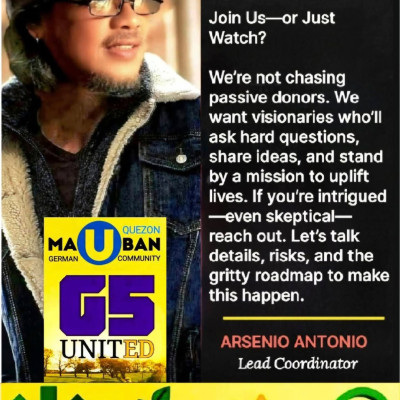
📸: Arsenio Antonio, Global Lead Coordinator / The BOSS
ECPP European Community Projects Philippines
https://mybossmedia.com/
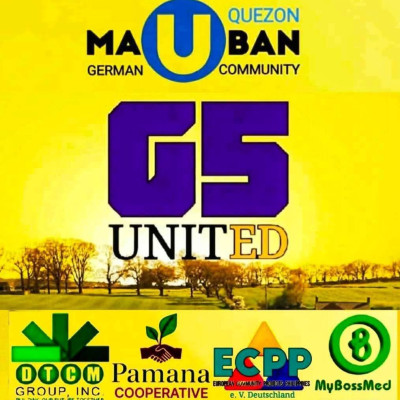
ECPP European Community Projects Philippines (German Community), Container house Community Projects. A project of DTCM Group Inc. Leading in promoting Ethical Investments.
The G5-G64 Cooperative System is an Intellectual Property of DTCM Group, Inc. All Rights Reserved.







UPDATE:
What began as a hopeful dream, a vision of effortless progress, has evolved into a testament to the power of thoughtful execution. As our target dates approach, we are reminded that true success is built not on haste, but on the unyielding strength of our foundations. The timeless Filipino adage – to never let a single rotten tomato spoil the entire basket – resonates deeply now. The closer we draw to our magnificent dream, the more we recognize the intricate dance of human dynamics, the need for discernment and foresight. We extend our invitations with open hearts, offering our projects to all who share our spirit. Yet, the profound task before us is to collectively discern and select the very best, ensuring that every piece of our foundation is strong, vibrant, and pure.
This understanding fuels the essence of our G5-G64 cooperative ecosystem, designed to empower each participant and grant us collective control over our destiny. The formation of your G5 unit is a critical juncture, demanding the meticulous hand-picking of four individuals whose dedication, vision, and integrity will serve as the very bedrock of our triumph. We are immensely proud to announce the establishment of our first 64 organic foundations in five diverse and dynamic locations: the heartland of Mauban, Quezon; the tranquil haven of Tanay, Rizal; amongst our resilient Overseas Filipino Workers in the Middle East; and, significantly, within the esteemed circle of 64 German families in Berlin, who are the five essential pillars of our groundbreaking German-Filipino self-sustaining community projects. Each deliberate step we take is a move forward, infused with certainty and care, propelling us towards a future of shared prosperity and unparalleled success.
📸: Arsenio Antonio, Global Lead Coordinator / The BOSS
ECPP European Community Projects Philippines
https://mybossmedia.com/
ECPP European Community Projects Philippines (German Community), Container house Community Projects. A project of DTCM Group Inc. Leading in promoting Ethical Investments.
The G5-G64 Cooperative System is an Intellectual Property of DTCM Group, Inc. All Rights Reserved.
UPDATE:
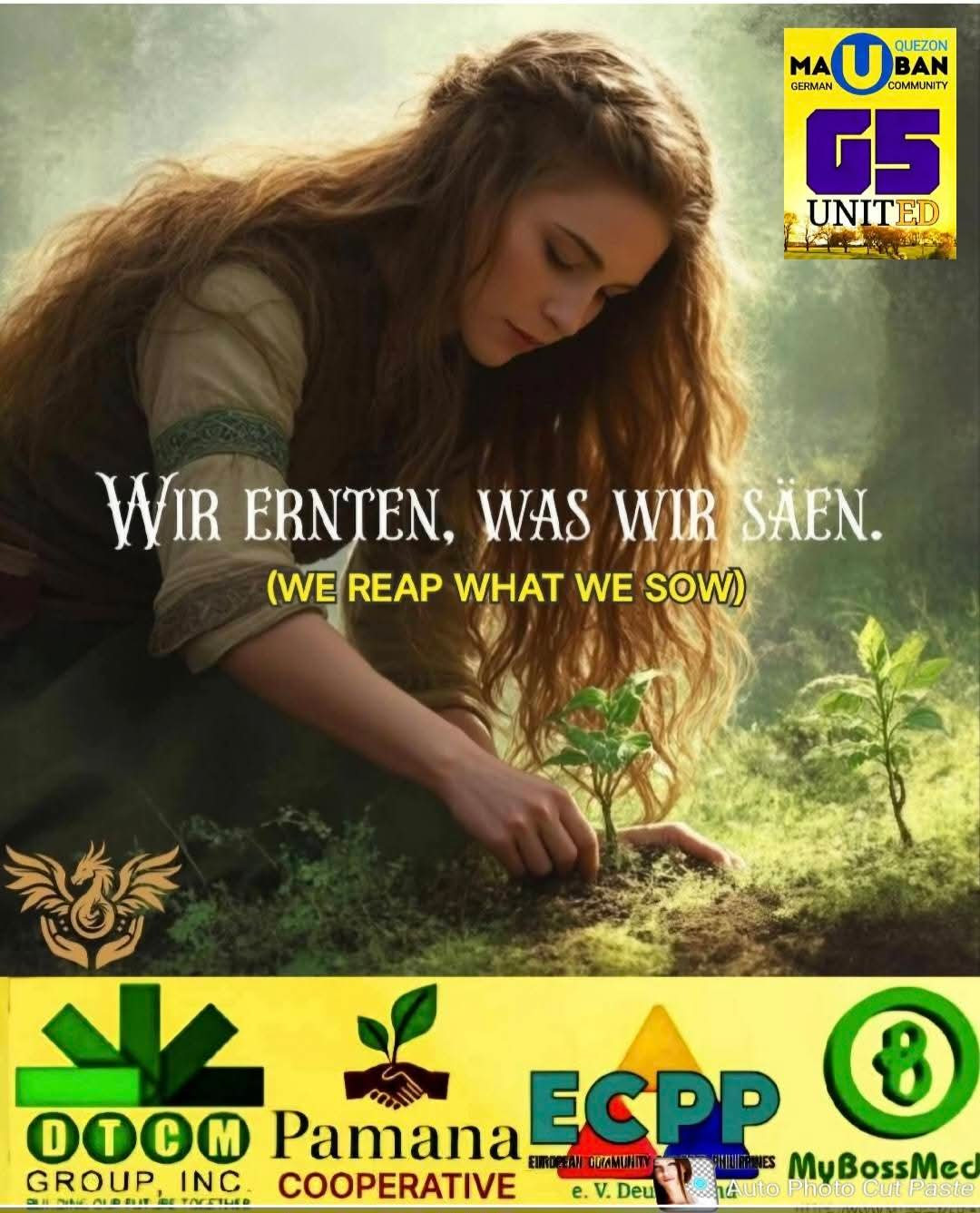
What began as a hopeful dream, a vision of effortless progress, has evolved into a testament to the power of thoughtful execution. As our target dates approach, we are reminded that true success is built not on haste, but on the unyielding strength of our foundations. The timeless Filipino adage – to never let a single rotten tomato spoil the entire basket – resonates deeply now. The closer we draw to our magnificent dream, the more we recognize the intricate dance of human dynamics, the need for discernment and foresight. We extend our invitations with open hearts, offering our projects to all who share our spirit. Yet, the profound task before us is to collectively discern and select the very best, ensuring that every piece of our foundation is strong, vibrant, and pure.
This understanding fuels the essence of our G5-G64 cooperative ecosystem, designed to empower each participant and grant us collective control over our destiny. The formation of your G5 unit is a critical juncture, demanding the meticulous hand-picking of four individuals whose dedication, vision, and integrity will serve as the very bedrock of our triumph. We are immensely proud to announce the establishment of our first 64 organic foundations in five diverse and dynamic locations: the heartland of Mauban, Quezon; the tranquil haven of Tanay, Rizal; amongst our resilient Overseas Filipino Workers in the Middle East; and, significantly, within the esteemed circle of 64 German families in Berlin, who are the five essential pillars of our groundbreaking German-Filipino self-sustaining community projects. Each deliberate step we take is a move forward, infused with certainty and care, propelling us towards a future of shared prosperity and unparalleled success.
📸: Arsenio Antonio, Global Lead Coordinator / The BOSS
ECPP European Community Projects Philippines
https://mybossmedia.com/
ECPP European Community Projects Philippines (German Community), Container house Community Projects. A project of DTCM Group Inc. Leading in promoting Ethical Investments.
The G5-G64 Cooperative System is an Intellectual Property of DTCM Group, Inc. All Rights Reserved.
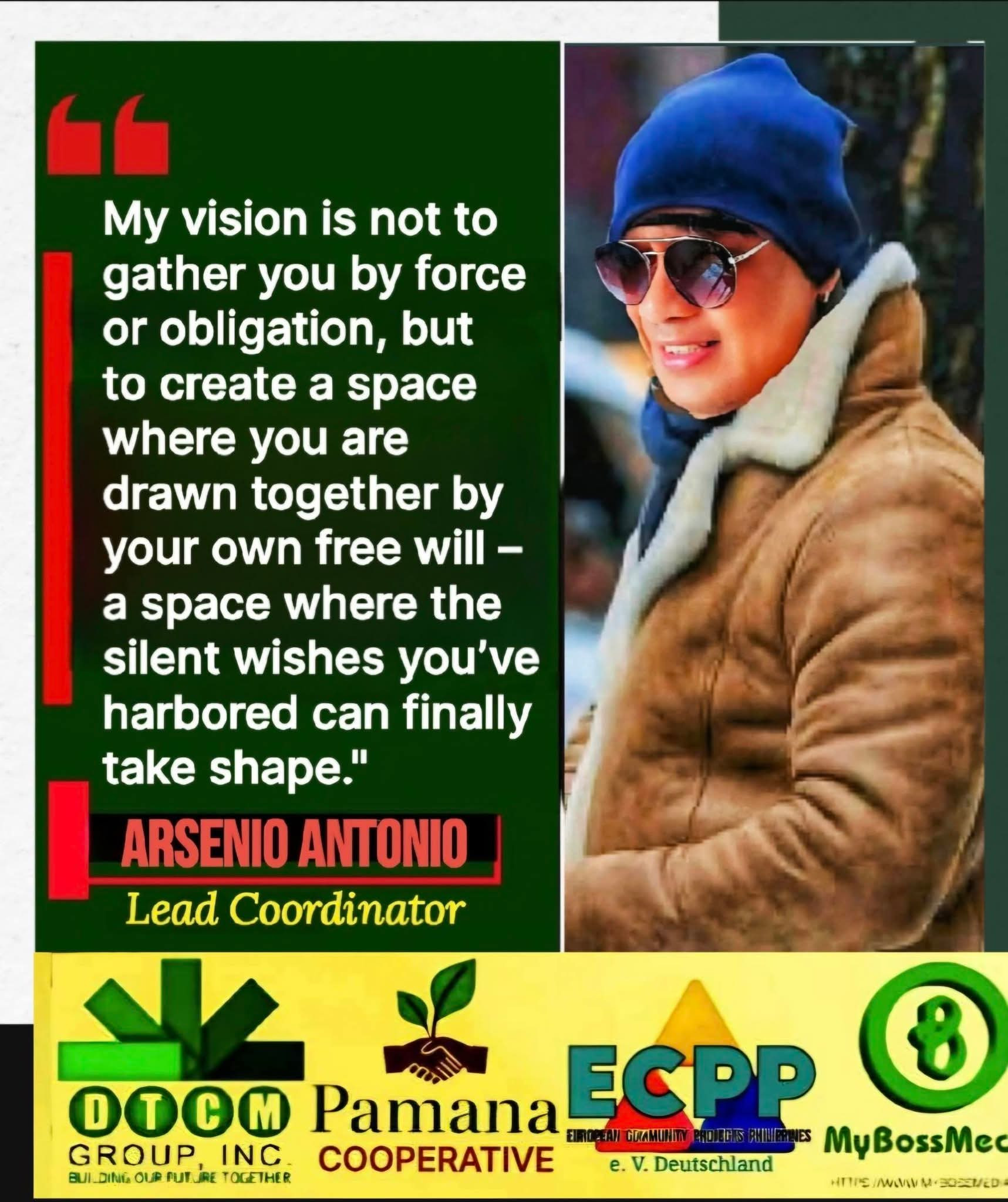
UPDATE:
What began as a hopeful dream, a vision of effortless progress, has evolved into a testament to the power of thoughtful execution. As our target dates approach, we are reminded that true success is built not on haste, but on the unyielding strength of our foundations. The timeless Filipino adage – to never let a single rotten tomato spoil the entire basket – resonates deeply now. The closer we draw to our magnificent dream, the more we recognize the intricate dance of human dynamics, the need for discernment and foresight. We extend our invitations with open hearts, offering our projects to all who share our spirit. Yet, the profound task before us is to collectively discern and select the very best, ensuring that every piece of our foundation is strong, vibrant, and pure.
This understanding fuels the essence of our G5-G64 cooperative ecosystem, designed to empower each participant and grant us collective control over our destiny. The formation of your G5 unit is a critical juncture, demanding the meticulous hand-picking of four individuals whose dedication, vision, and integrity will serve as the very bedrock of our triumph. We are immensely proud to announce the establishment of our first 64 organic foundations in five diverse and dynamic locations: the heartland of Mauban, Quezon; the tranquil haven of Tanay, Rizal; amongst our resilient Overseas Filipino Workers in the Middle East; and, significantly, within the esteemed circle of 64 German families in Berlin, who are the five essential pillars of our groundbreaking German-Filipino self-sustaining community projects. Each deliberate step we take is a move forward, infused with certainty and care, propelling us towards a future of shared prosperity and unparalleled success.
📸: Arsenio Antonio, Global Lead Coordinator / The BOSS
ECPP European Community Projects Philippines
https://mybossmedia.com/
ECPP European Community Projects Philippines (German Community), Container house Community Projects. A project of DTCM Group Inc. Leading in promoting Ethical Investments.
The G5-G64 Cooperative System is an Intellectual Property of DTCM Group, Inc. All Rights Reserved.
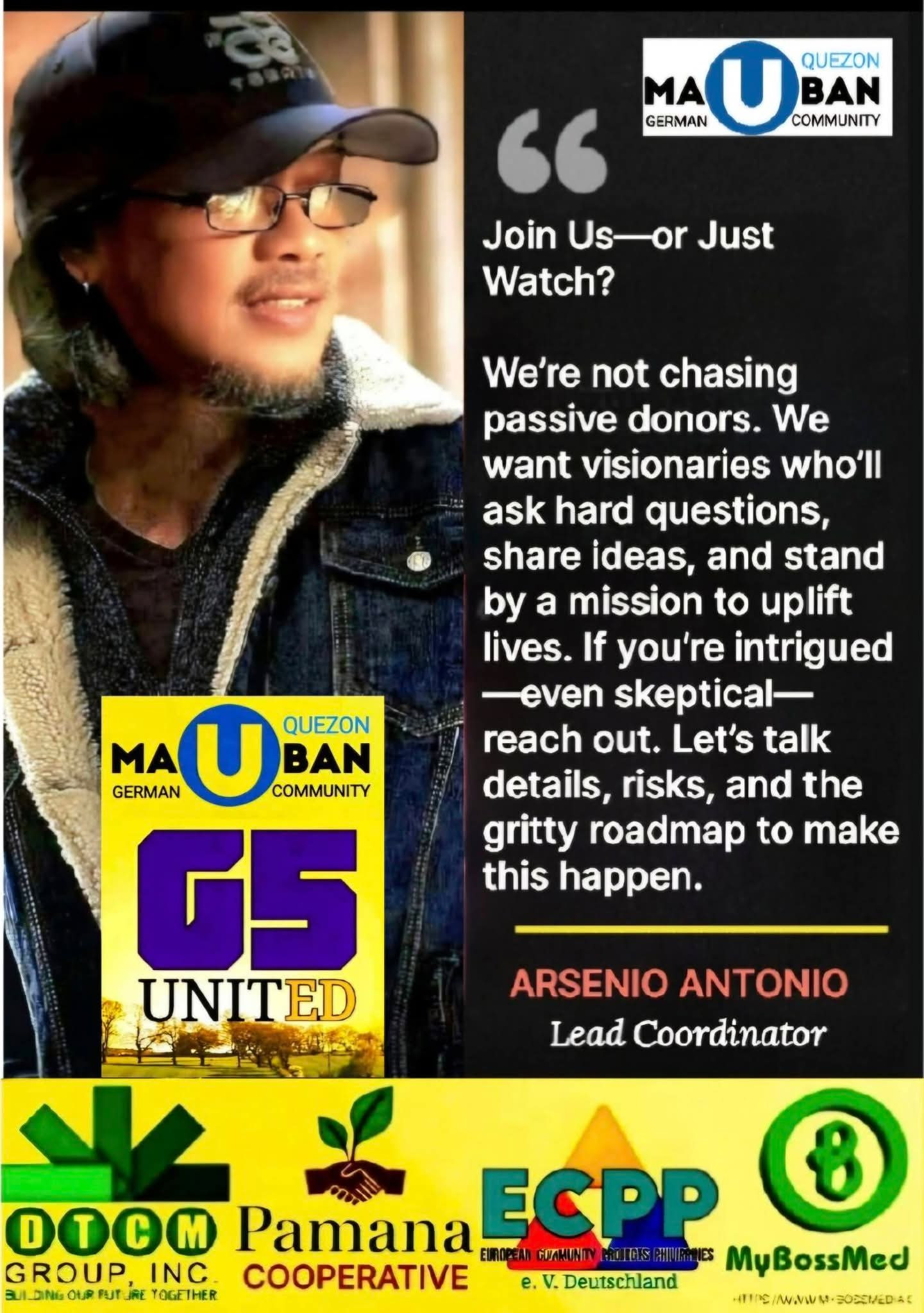
UPDATE:
What began as a hopeful dream, a vision of effortless progress, has evolved into a testament to the power of thoughtful execution. As our target dates approach, we are reminded that true success is built not on haste, but on the unyielding strength of our foundations. The timeless Filipino adage – to never let a single rotten tomato spoil the entire basket – resonates deeply now. The closer we draw to our magnificent dream, the more we recognize the intricate dance of human dynamics, the need for discernment and foresight. We extend our invitations with open hearts, offering our projects to all who share our spirit. Yet, the profound task before us is to collectively discern and select the very best, ensuring that every piece of our foundation is strong, vibrant, and pure.
This understanding fuels the essence of our G5-G64 cooperative ecosystem, designed to empower each participant and grant us collective control over our destiny. The formation of your G5 unit is a critical juncture, demanding the meticulous hand-picking of four individuals whose dedication, vision, and integrity will serve as the very bedrock of our triumph. We are immensely proud to announce the establishment of our first 64 organic foundations in five diverse and dynamic locations: the heartland of Mauban, Quezon; the tranquil haven of Tanay, Rizal; amongst our resilient Overseas Filipino Workers in the Middle East; and, significantly, within the esteemed circle of 64 German families in Berlin, who are the five essential pillars of our groundbreaking German-Filipino self-sustaining community projects. Each deliberate step we take is a move forward, infused with certainty and care, propelling us towards a future of shared prosperity and unparalleled success.
📸: Arsenio Antonio, Global Lead Coordinator / The BOSS
ECPP European Community Projects Philippines
https://mybossmedia.com/
ECPP European Community Projects Philippines (German Community), Container house Community Projects. A project of DTCM Group Inc. Leading in promoting Ethical Investments.
The G5-G64 Cooperative System is an Intellectual Property of DTCM Group, Inc. All Rights Reserved.