
Every serious turbo build eventually reaches the same question: how much air do you actually need? When the answer is a lot, the Garrett G351050 turbo is one of the most compelling options on the market. It takes the proven G35 platform and adds a larger compressor, giving you the airflow to chase fourfigure power on the right engine while still benefiting from modern ball bearing technology.This guide is written for anyone planning a Garrett G35 turbo upgrade, from the enthusiast replacing a worn out factory unit to the builder designing a full race engine from scratch. We cover what makes the 1050 different, who should choose it, what supporting parts you need, how to approach a kit and what to check before you buy a Garrett G35 turbo for sale. For comparison with other Garrett families, take a look at the full GTseries range.
What Is the Garrett G351050?
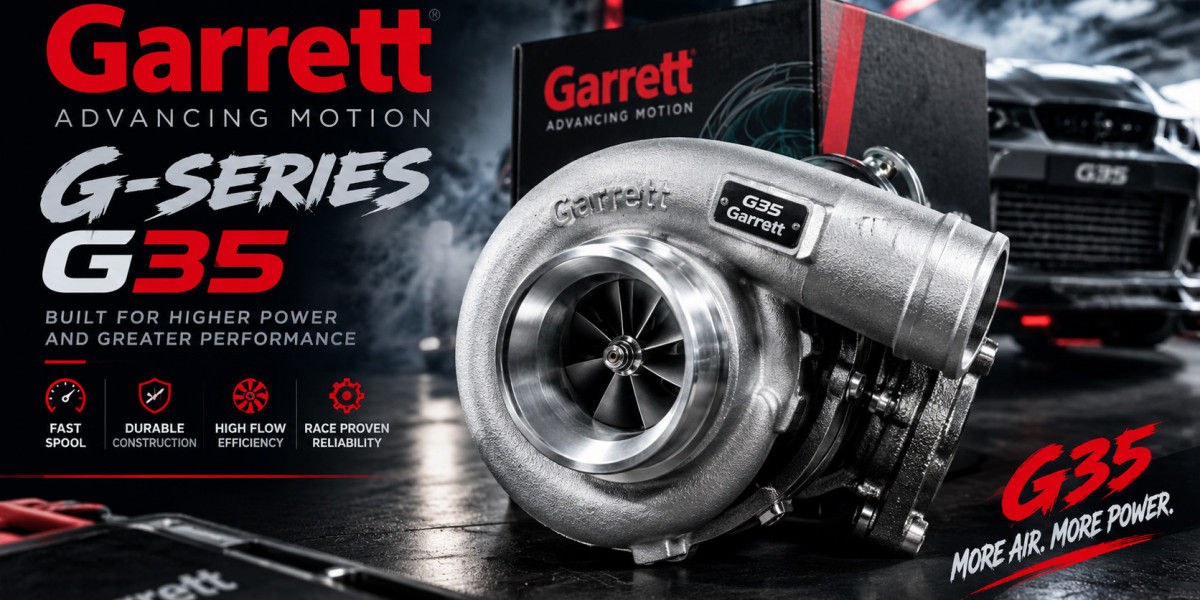
The G351050 is the highflow version of the G35 frame within Garrett's G Series. The "1050" refers to the approximate upper end of its power window, which Garrett lists at roughly 475 to 1050 horsepower. The lower limit shows that it is still usable at moderate outputs, while the upper limit shows how far it can go when the engine is built to match.Like its smaller sibling, it uses a dual ball bearing cartridge, a precision machined billet compressor wheel and a turbine wheel made from heat resistant material. The compressor is sized to flow more air, which suits large displacement engines or builds that run high boost and high RPM.
Garrett G35 Turbo Upgrade When Does It Make Sense?
Upgrading to a G35 is a significant step. It makes sense when
Your current turbo is at the limit of its airflow and efficiency
You plan to raise boost or switch to a more powerful fuel such as E85
You have already upgraded the engine's internals and want to unlock their potential
You want better response than a similar sized older design can offer
You are building a new engine and need a turbo that will not limit future development
It may be unnecessary if your car is only lightly modified. A smaller turbo, such as one from the Garrett GT28 family, can deliver a faster feel at lower power targets. For compact engines that never exceed modest output, even the GT25 range may be a better match.
Performance Benefits of the G351050
More airflow without extreme lag
The larger compressor flows more air, but the lightweight design and ball bearings keep the rotating assembly responsive. That means you can reach a high power target without the wait that a large conventional turbo often brings.
Efficient compression
Because the compressor works efficiently at high pressure ratios, the intake air stays cooler than it would with an overworked small turbo. Cooler air allows more aggressive tuning and improves reliability.
Durable construction
The materials and bearing design are chosen for demanding use. When supplied with clean oil and correctly installed, the turbo can handle repeated hard use on road and track.
Flexible tuning
With several housing options and the ability to run either a single or twin wastegate arrangement on suitable setups, the turbo can be adapted to many different builds.
Choosing the Turbine Housing
The turbine housing has a major effect on how the 1050 behaves. A smaller A/R gives faster spool but increases backpressure at high RPM. A larger A/R lowers backpressure and supports more top end power but delays boost.Because the compressor on the 1050 is already large, many builders pair it with the housing that favours response, particularly on road cars. Drag and highRPM racers often lean the other way and accept later boost for stronger power at the top. Whatever you decide, confirm the exact housing sizes, flange types and availability with the seller before ordering, as they can vary.
What You Need Around the Turbo
A powerful turbo is just one part of the system. Plan the following supporting components from the beginning.
Exhaust manifold
A quality manifold is critical. Look for equal length runners, smooth merges and a design that matches the turbine flange. A poor manifold wastes the turbo's potential and can crack under heat.
External wastegate
Highpower builds usually need an external wastegate sized to the airflow of the engine. It protects the turbine from overspeeding and makes boost control more stable.
Intercooler and piping
A large frontmount intercooler with smooth piping helps keep charge temperatures low. Avoid unnecessary restrictions and make sure all joints are properly sealed.
Fuel system
Larger injectors, a highflow fuel pump and suitable fuel lines are essential. The system needs to support the target power with a margin to protect the engine.
Engine management
A standalone or fully programmable ECU, together with a skilled tuner, is strongly recommended. Safe power depends on correct fuelling and ignition timing.
Engine internals
At high outputs, forged pistons, rods and strong head studs are worth the investment. A turbo can easily exceed the limits of a standard bottom end.
Garrett G35 Turbo Kit Is It Worth Buying?
A complete Garrett G35 turbo kit can be an excellent way to save time and reduce risk. A typical kit includes the turbo, manifold, downpipe, oil lines, charge piping and fittings designed to work together. The benefits include
Correct fitment without custom fabrication
A matched layout that supports good spool
Fewer compatibility problems
Often a lower total cost than sourcing every part individually
If you prefer to design your own system, buying the turbo on its own gives you more freedom. This route is popular for engine swaps and unusual installations. Either way, check what is included and what is not so that there are no surprises when the parts arrive.
How to Buy a Garrett G35 Turbo for Sale Safely
The market includes genuine units, counterfeit products and inaccurate listings. Protect yourself with these checks
Buy from a reputable supplier. A specialist retailer should offer clear product information, support and a warranty.
Confirm the part number. Make sure it matches the model, housing and flange you need.
Compare specifications. Check the wheel details, housing size and rotation against official documentation.
Be cautious of prices that look too good. Genuine high performance turbos carry a real cost.
Ask about shipping and returns. Know the policy before you pay.
Inspect the turbo on arrival. Check for damage, spin the shaft by hand and make sure all plugs and covers are intact.
You can start your search at Arctic Performance Parts, where Garrett products are organised by family, making it easier to compare options. If you are still deciding between families, the Garrett GT35 and GT40 pages are good references.
Boost Performance and Tuning Strategy
The Garrett G35 boost performance depends on how the entire system is tuned. Start at a conservative boost level and raise it gradually while monitoring airfuel ratio, ignition timing, exhaust gas temperature and knock. Because the compressor is efficient, you can often reach your power target with moderate boost, which is easier on the engine.
Use a good boost controller and make sure the wastegate spring and actuator are correct. Data logging is extremely valuable; it shows whether the turbo is operating within the efficient range and whether the engine is safe. If you notice rising intake temperatures or falling efficiency at high load, consider improving the intercooler or adjusting the tune.
Installation Notes
Good installation practice protects your investment.
Oil feed Use a clean, filtered, pressurised supply with the line size recommended in the manual.
Oil drain Keep it large, short and sloping steadily down to the sump.
Support Brace the turbo and manifold to reduce vibration and stress.
Heat management Use shields or wrap where needed to protect nearby components.
Prime before start Pour clean oil into the feed port and turn the shaft by hand.
After installation, check carefully for exhaust and boost leaks. Even a small leak can reduce performance and affect the tune.
Maintenance Tips
Change oil at shorter intervals than you would on a stock car, use high quality synthetic oil and keep the air filter clean. Let the engine idle for a short time after a hard run and listen for unusual noises that could signal a problem. Inspect the compressor and turbine wheels periodically for any sign of damage.
Conclusion
The Garrett G351050 turbo is built for enthusiasts who want serious airflow, high efficiency and modern response. It rewards a well planned installation with strong, usable power and room to grow. Choose the version that matches your engine, plan the supporting parts carefully and buy from a source you can trust.To explore Garrett turbochargers and related components, visit Arctic Performance Parts and browse the GTseries collection for additional options.
Frequently Asked Questions (FAQs)
How much power can the G351050 make?
The published window is about 475–1050 hp. The real figure depends on the engine, fuel, tune and supporting modifications.
Is the G351050 too big for a 2.0 litre engine?
It can work if you are targeting very high power, but spool will be later than a smaller turbo. For most 2.0 litre builds, the G35900 is usually the better match.
Do I need a kit?
Not necessarily. A kit saves time and ensures fitment, but custom builds are common for swaps and special projects.
What should I check when buying a turbo for sale?
Check the part number, housing size, flange style, rotation, supplier reputation, warranty and return policy.
Does the G351050 need an external wastegate?
In most performance applications, yes. It gives better boost control and helps protect the turbine.