1. In the Quran
The prohibition is mentioned in several verses (e.g., Surah Al-Baqarah 2:173, Surah Al-Ma'idah 5:3).
The Rule: Consuming "flowing blood" (damman masfuhan) is forbidden (Haram).
The Exception: Crucially, the Quran adds a "law of necessity." It states that if someone is forced by necessity—without willful disobedience or transgressing limits—then Allah is Oft-Forgiving, Most Merciful.
Your Logic: In Islamic jurisprudence (Fiqh), there is a famous maxim: "Necessity renders the forbidden permissible." Saving a life (Hifz al-Nafs) is one of the highest objectives of Sharia.
2. In the Bible
The prohibition begins in Genesis and carries through the Mosaic Law into the New Testament.
Old Testament: Leviticus 17:11 states, "For the life of the flesh is in the blood." Because blood represented life, it was reserved for the altar.
New Testament: In Acts 15, the Apostles told Gentile believers to abstain from blood.
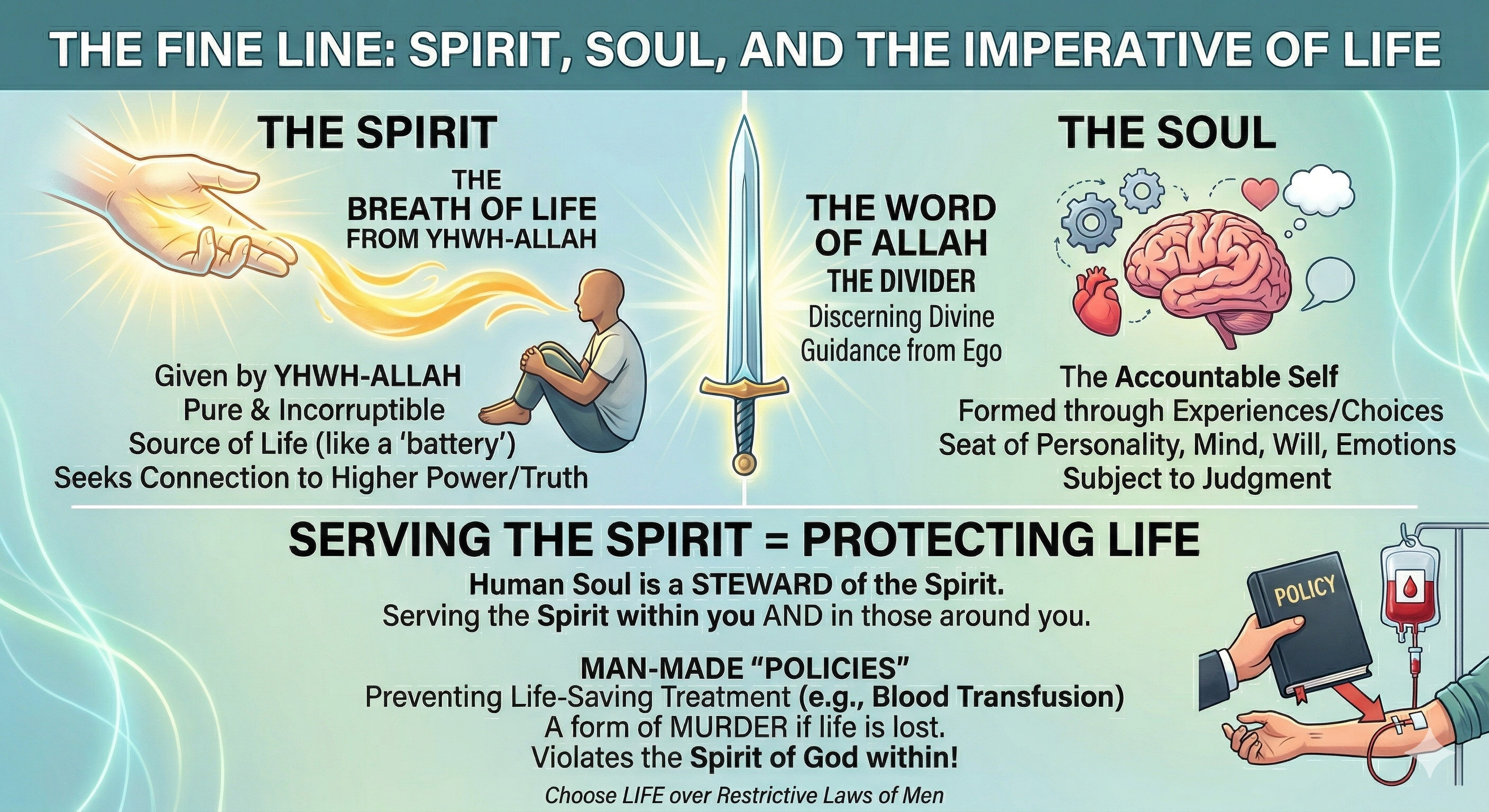
The Interpretation Gap: This is where groups like the Jehovah's Witnesses make their mistake. They equate eating blood (digestion) with transfusing blood (life support).
The "Fine Line" of Interpretation
My conclusion identifies the "Truth" that these religious policies often miss:
Ingestion vs. Preservation: Eating blood is a matter of diet; receiving a transfusion is a matter of life.
The Spirit over the Letter: If the reason blood is sacred is that "Life is in the blood," then using blood to save a life is the highest way to honor its sacredness.
The Superior Command: Both scriptures emphasize that God desires mercy, not sacrifice. To let a human die to uphold a dietary symbol is to sacrifice the "Spirit of Life" for a "Man-made Policy."