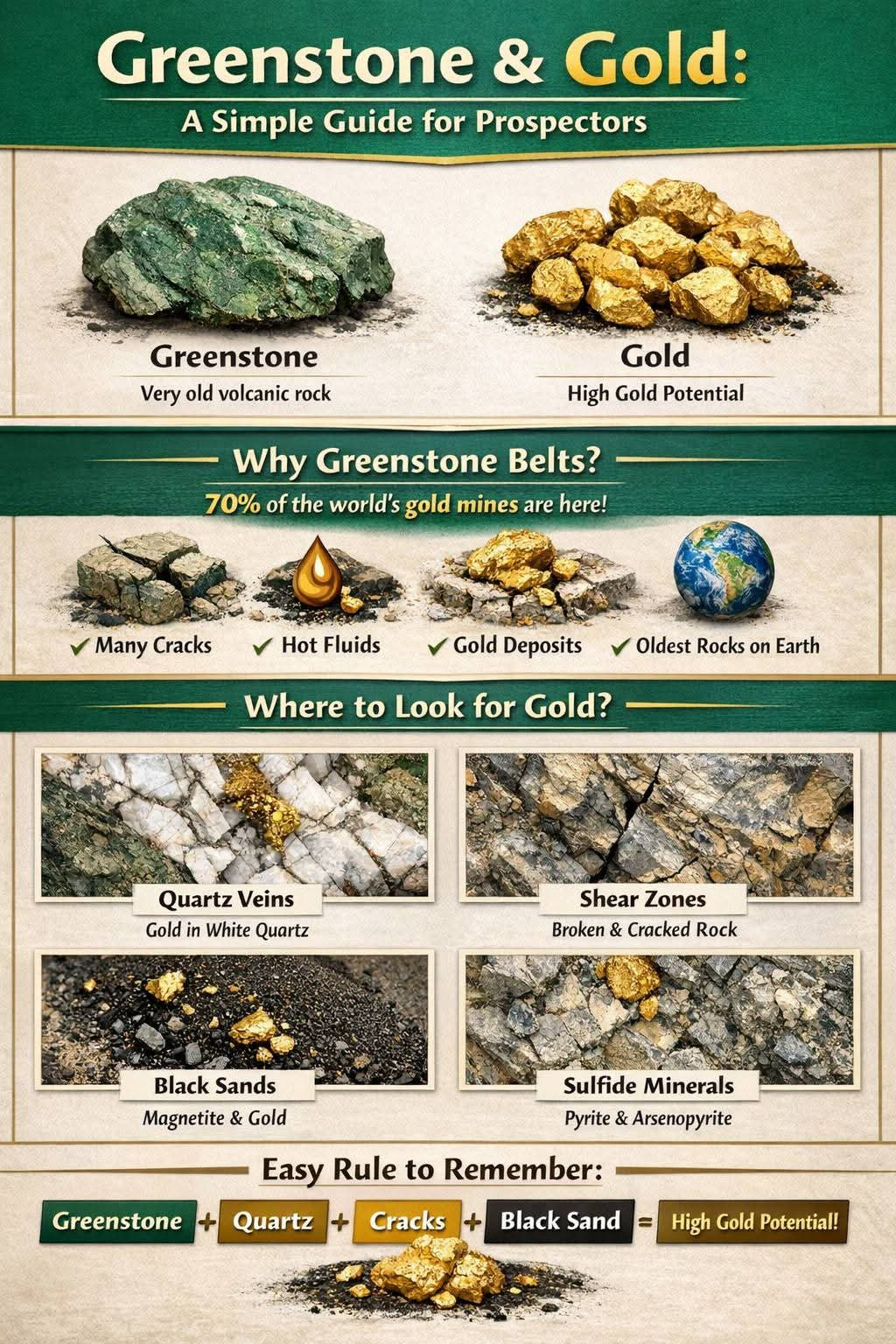
Greenstone and Gold – A Simple Guide for Gold Prospectors
What is Greenstone?
Greenstone is very old volcanic rock that changed because of heat and pressure (metamorphic rock).
Its green color comes from minerals like:
Chlorite
Actinolite
Epidote
It usually formed 2.5–3.5 billion years ago, making it some of the oldest rocks on Earth.
Why is it important for gold?
Greenstone belts are: One of the best geological environments for gold formation in the world
About 70% of the world’s gold mines are located in these belts.
Why?
• Many cracks and fractures
• Hot fluids move through them
• These fluids carry dissolved gold
• When they cool → gold deposits in the cracks
Where should you look for gold in Greenstone?
1. Quartz veins
White lines or veins cutting through the rock
Gold often forms with quartz
2. Shear or fractured zones
Broken or crushed rocks
Gold-bearing fluids passed through here
Black sands
Magnetite + hematite
Heavy gold settles with them
4. Sulfide minerals
Pyrite
Arsenopyrite
May contain microscopic gold
Easy tips for beginners
If you see green rock + quartz → check carefully
Search cracks, not just the surface
Look at the bottom of slopes and streams
Concentrate on black sand in your pan
Break samples with a geological hammer
Easy rule to remember
Greenstone + Quartz + Cracks + Black sand = High gold potential.
#starseverywhere #treasure #goldprospector #goldmining #goldrecovery #goldrush #goldmining #golddiscovery #metaldetecting #goldsearch #goldfinds #treasurehunting #golddiggers #prospectorslife #goldrecovery#goldprospecting #georgia #quebec #gold #geology @all followers