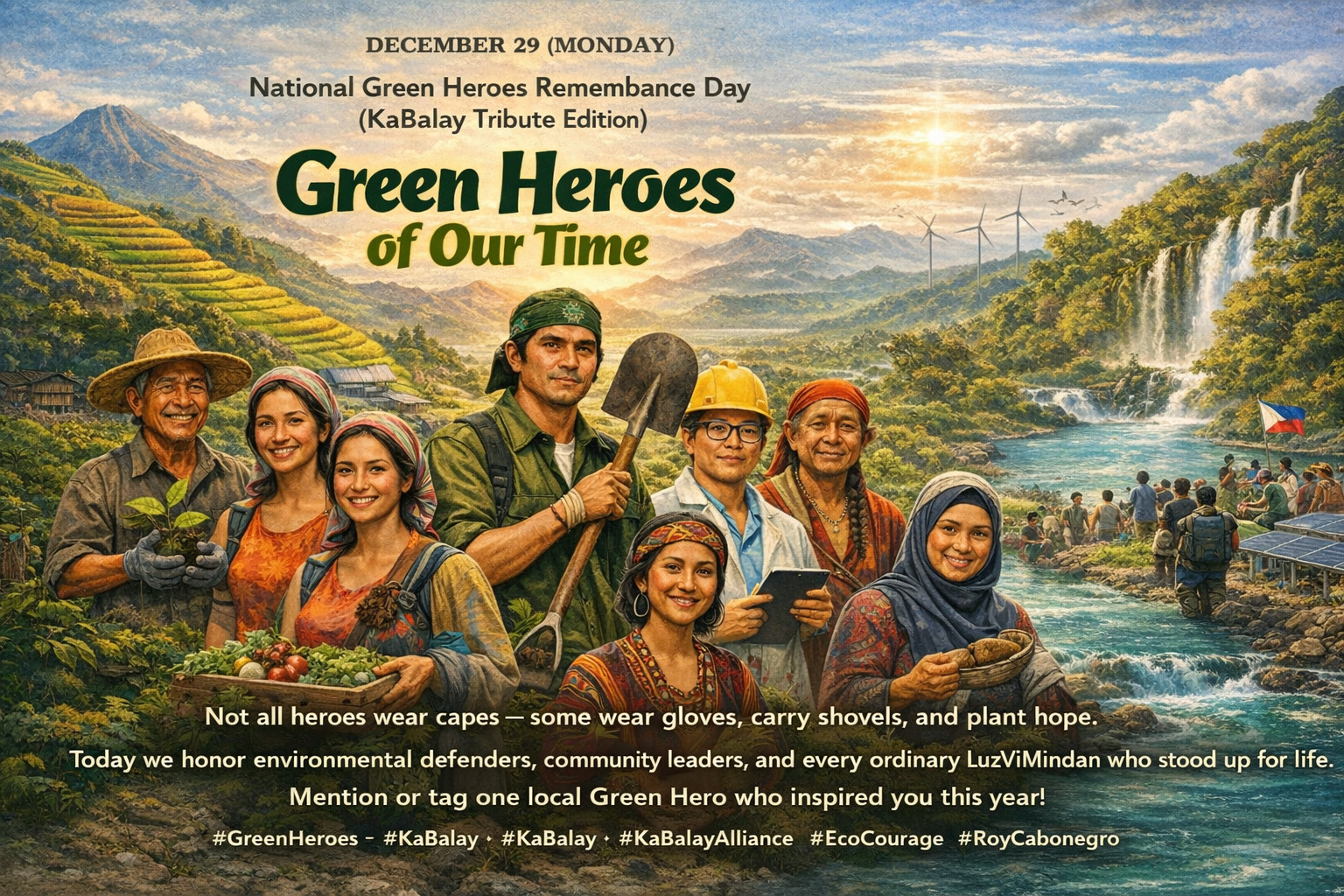
Improving Protection for Green Advocacy Frontliners in LuzViMinda
A KaBalay Party Community Discussion Post
Across Luzon, Visayas, and Mindanao, thousands of people quietly stand on the frontlines of environmental protection — forest rangers, Bantay Gubat, Bantay Dagat, wildlife enforcement officers, Indigenous land defenders, fisherfolk leaders, women organizers, and youth volunteers.
They protect forests from illegal logging, guard coastal waters from destructive fishing, monitor wildlife trafficking, and defend ancestral lands. Yet many of them do this work with minimal protection, weak institutional backing, and real personal risk.
The Philippines consistently ranks among the world’s most dangerous countries for environmental defenders. Harassment, red-tagging, legal intimidation, and killings remain documented realities. At the same time, climate impacts are intensifying — making the role of green frontliners more critical than ever.
Why this matters
Environmental frontliners are not activists “on the side.”
They are essential public-interest workers safeguarding ecosystems that support food security, disaster resilience, public health, and community livelihoods.
Protecting them means protecting:
Forests that prevent floods and landslides
Seas that sustain fisheries and coastal communities
Biodiversity that underpins local economies
Indigenous knowledge and ancestral stewardship
Democratic space for environmental advocacy
Key gaps we need to address
From KaBalay’s perspective, urgent reforms are needed in at least five areas:
Legal protection: Clear national and local mechanisms recognizing and protecting environmental defenders
Safety and security: Training, equipment, insurance, and rapid-response support for threatened frontliners
Institutional accountability: Stronger action against harassment, red-tagging, and violence
Sustainable support: Fair compensation, livelihood security, and long-term funding for community-based monitoring
Community participation: Meaningful inclusion of Indigenous peoples, women, and youth in environmental governance
Let’s discuss
We are opening this thread to hear from the community:
What concrete protections should be prioritized for environmental defenders in LuzViMindan?
Are there local models (barangay, LGU, Indigenous, or civil society–led) that actually work?
How can laws, budgets, and enforcement be improved without militarizing environmental work?
What role should political parties, local governments, and citizens play?
This is not about ideology.
This is about keeping people alive, ecosystems standing, and communities resilient.
We invite constructive discussion, evidence-based ideas, and lived experiences.
Your insights can help shape stronger, people-centered policies for those who defend nature on our behalf.
— KaBalay Party
Green Governance • Ecopreneurship • Communities