"War is a wealthy men’s business paid by the poor like us." Think about it: the ones who decide to go to war sit in gilded boardrooms, parliamentary chambers, or palaces. They trade in arms contracts, control access to oil, minerals, and land — profits that line their bank accounts long after the smoke clears. Meanwhile, it’s our brothers, sisters, parents, and friends who put on the uniform. It’s our neighborhoods that become battlefields, our children who go hungry when resources are diverted to weapons, our futures that are shattered by debt incurred to fund destruction. The wealthy risk nothing but their portfolios; we risk everything that matters.
"Don’t let them play with us again." This is the call to wake up — to stop being pawns in a game we never asked to join. For too long, those in power have used fear, nationalism, and false promises to convince us that war is "necessary" — that it’s about "freedom" or "safety." But when we look closely, the real motive is almost always power and profit. We have the power to refuse: to demand diplomacy over drones, to hold leaders accountable for the human cost of their decisions, to build communities that prioritize care over conflict. It starts with asking hard questions: Who benefits from this war? Who will die for it?
"History only repeats itself written by the victors who has all the money and resources in the world." The victors get to frame the story — to paint themselves as heroes, to erase the suffering of the marginalized, to justify the unjust. But we hold the other half of history: the stories of families torn apart, of lands destroyed, of ordinary people who resisted, who survived, who refused to let their lives be reduced to a footnote in a rich man’s narrative. When we remember our history — the unwritten, unheard truths — we break the cycle. We refuse to let the same lies be told to the next generation.
This isn’t just a critique — it’s a call to action. Because when the poor and the marginalized unite, when we refuse to be divided by race, religion, or nationality, we become a force that no amount of money or power can ignore. We can build a world where wealth is used to heal, not harm; where peace is not a luxury for the few, but a right for all.
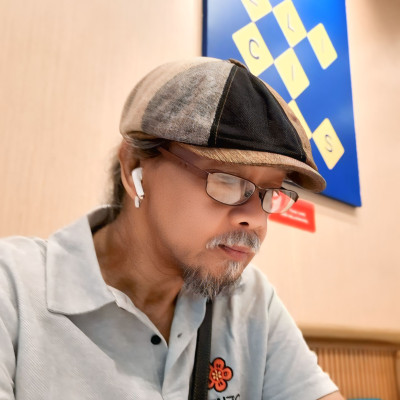
Arsenio Antonio
ECPP European Community Projects Philippines